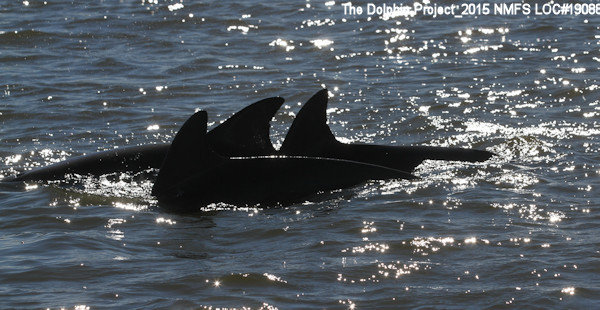
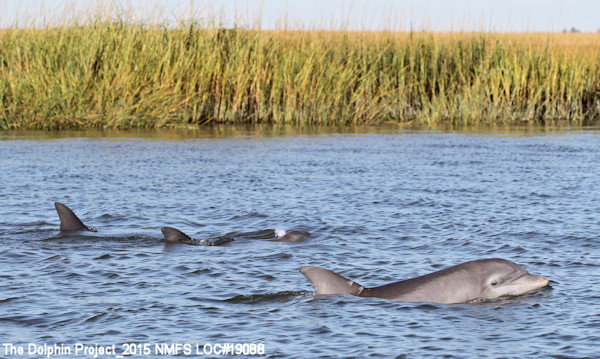
Bottlenose dolphins (Tursiops truncatus) are found in a wide range of habitats, from shallow coastal estuaries to deep offshore waters. Scientists often recognize two general types based on where they live:
Estuarine / Coastal Dolphins
Live in bays, sounds, estuaries, and tidal creeks
Often remain in the same area year-round
Typically smaller in size
Form smaller, more stable groups
Offshore Dolphins
Live in deeper, open ocean waters
Travel over larger distances
Typically larger in size
Often found in bigger groups
The Dolphin Project studies estuarine bottlenose dolphins along the coast from Hilton Head, South Carolina, to St. Marys, Georgia, using photo-identification and long-term monitoring to better understand dolphin populations, behavior, and habitat use. This research helps inform conservation efforts and supports the protection of local marine ecosystems.
Classification
Dolphins belong to the order Cetacea, which includes whales, dolphins, and porpoises. Bottlenose dolphins are part of the suborder Odontoceti, also known toothed whales.
Diet Dolphins are carnivores that primarily eat fish, crustaceans and squid. They use their teeth to grasp and hold prey, not to chew. Most prey is swallowed whole.
Echolocation Dolphins use a highly advanced system called echolocation to navigate and find food. By emitting sound waves and interpreting the return echoes, they can determine size, shape, distance and density of objects. This ability is often compared to medical imaging like ultrasound.
Size Estuarine bottlenose dolphins typically grow to: 6-8 feet (2- 2.5 meters) in length
Newborn calves are usually: 2.5- 3 feet (0.75 -1 meter) long
Reproduction
Female dolphins give birth approximately every 2-3 years.
Mating behavior can occur year round.
Gestation lasts about 12 months.
Speed
Dolphins can swim at speeds of up to 25 mph (40 km/h)
Lifespan Dolphins can live from 25 to 65 years, depending on the environmental conditions and overall health.
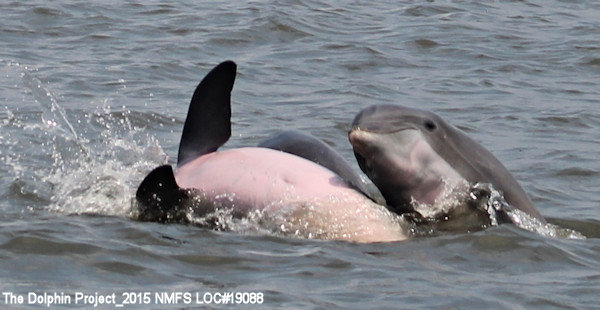
Appearance Bottlenose dolphins typically have: A gray body, ranging from light to dark. A lighter underside, which can appear white or slightly pink.
Did You Know? Dolphins may look like they are always smiling, but this is simply the natural shape of their jaw, not an indicator of emotion.
Emerging Research Scientific understanding of bottlenose dolphins continues to evolve.
Tamanend’s bottlenose dolphin (Tursiops erebennus) is a species of bottlenose dolphin found in coastal waters of the eastern United States. These dolphins were previously classified as a nearshore form of the common bottlenose dolphin (Tursiops truncatus).